
Stop Guessing: Are Your Financials Driving Real-Time Decisions?
As a business owner, you get financial reports every month. But are they telling you the whole story? For most growth companies, standard financial statements are a rearview mirror. They show where your business has been, but they don't tell you what's about to break, where margin is leaking, or which decisions deserve your attention now.
That gap matters more once your company moves beyond early-stage hustle. In a founder-led business, weak reporting doesn't just create accounting noise. It leads to late hiring decisions, missed cash crunches, underpriced work, bloated overhead, and avoidable stress. You end up managing from instinct when the business is already complex enough to require better instrumentation.
Financial reporting best practices are supposed to solve that problem. But too much advice stays stuck at the compliance level. Yes, your reporting needs to be accurate, current, complete, and consistent, and strong reporting still centers on core statements like the income statement, balance sheet, statement of cash flows, A/R aging, and budget-versus-actual reporting, with GAAP remaining the baseline framework for consistency and comparability in U.S. reporting under federal securities regulation (Citrin Cooperman on financial reporting best practices). That's the starting point, not the finish line.
What helps is turning reporting into a decision system. You need reporting that shows where cash will tighten, which clients are worth keeping, which operating issues are about to hit profit, and what buyers or lenders will question if they look under the hood.
The eight practices below do exactly that. They're practical, they work in real companies, and they matter most for founder-led businesses that have outgrown basic bookkeeping but aren't ready to carry a full in-house finance function. If you want reports that improve profitability, cash flow, and company value, start here.
Table of Contents
- 1. 1. Master Your Liquidity with a 13-Week Rolling Cash Flow Forecast
- 2. 2. Uncover True Profitability with Margin Analysis by Job, Project, or Client
- 3. 3. Drive Accountability with an Integrated KPI Dashboard and Scorecard
- 4. 4. Build a Foundation of Trust with a Standardized Chart of Accounts
- 5. 5. Accelerate Cash Flow with Disciplined AR Aging Management
- 6. 6. Turn Data into Insight with Variance Analysis and Commentary
- 7. 7. Maximize Your Valuation with an Exit-Ready Financial Review
- 8. 8. Align Your Team with an Integrated Budget and Rolling Forecast
- 8-Point Financial Reporting Best Practices Comparison
- From Report to Results Your Next Financial Move
1. 1. Master Your Liquidity with a 13-Week Rolling Cash Flow Forecast
If you only look at your cash balance, you're already late.
A 13-week rolling cash flow forecast gives you enough near-term visibility to spot pressure before it turns into a crisis. It's short enough to stay grounded in reality and long enough to catch payroll strain, tax payments, inventory buys, delayed customer collections, and debt service before they collide.
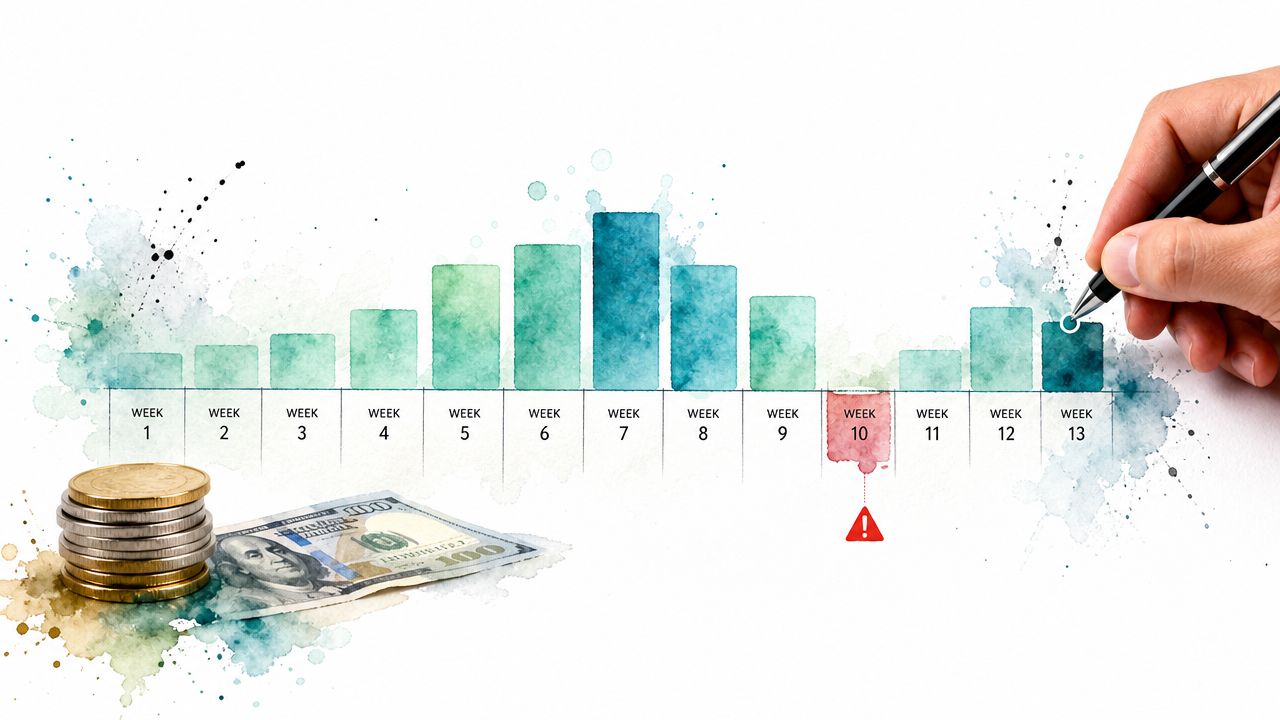
In founder-led companies, this report usually becomes the first real bridge between finance and operations. Sales can see the timing impact of delayed invoicing. Operations can see how project schedules affect collections. Ownership can decide earlier whether to slow spending, push collections, or use a credit line before options narrow.
What a useful forecast includes
A good 13-week model isn't a vague guess by month. It tracks weekly cash receipts and weekly disbursements, then compares forecast to actual so your team can tighten assumptions over time.
At minimum, include:
- Beginning cash: Start with reconciled bank cash, not a rough dashboard number.
- Expected collections: Tie this to open invoices, payment terms, and likely timing by customer.
- Planned disbursements: Separate payroll, rent, vendors, taxes, debt, and owner distributions.
- Known timing risks: Flag items tied to job milestones, shipment timing, or disputed invoices.
- Decision triggers: Define what happens if projected cash drops below your operating floor.
Practical rule: If the forecast says cash gets tight in six weeks, act this week. By the time the bank balance confirms it, your options are worse.
Where companies get this wrong
The biggest mistake is treating the forecast like a finance-only worksheet. It isn't. If sales, operations, and project leaders don't help update assumptions, the file goes stale fast and becomes another spreadsheet no one trusts.
The second mistake is building it off annual budget logic. A budget says what should happen. A rolling cash flow forecast tells you what's likely to happen next, based on current conditions. Those are different jobs.
I also prefer tying forecast assumptions to leading indicators. Signed contracts, open quotes, jobs in progress, inventory purchase plans, and billing status are often more useful than top-line optimism. If you want a deeper look at that operating discipline, this article on why financial forecasting matters during rapid growth is a good companion.
2. 2. Uncover True Profitability with Margin Analysis by Job, Project, or Client
Many companies think they know their margin. Most only know an average.
Average margin hides bad work, bad clients, weak pricing, poor scope control, and operational waste. If you run a construction, distribution, or professional services company, the underlying story usually lives below the company-wide P&L. You need to see profitability by job, project, service line, customer, or client relationship.
A contractor can look healthy overall while one recurring project type burns labor unnoticed. A services firm can show strong revenue growth while a flagship client absorbs senior staff time that never gets billed. A distributor can carry “good” revenue from small accounts that trigger expensive fulfillment and frequent exceptions.
What to measure at the unit level
Start with contribution margin. In plain English, that means revenue minus the direct costs required to deliver that work. Depending on your business, that may include direct labor, materials, freight, subcontractors, commissions, or platform-specific service costs.
Then add a consistent method to allocate shared overhead for management review. The point isn't theoretical precision. The point is comparability. If every job or client gets treated differently each month, the report won't help you price or prioritize.
Useful views include:
- Bid versus actual margin: This shows whether your estimating or delivery process is breaking down.
- Client profitability over time: Some relationships start profitable and erode through scope creep and service exceptions.
- Margin by service or job type: This helps you decide where to grow and where to pull back.
The fastest way to improve profit is often to stop defending low-margin work that looks good at the revenue line.
What works in practice
You don't need a giant software implementation to begin. A spreadsheet tied to disciplined timekeeping, project coding, and material tracking can surface a lot of truth quickly. If your team can't code labor and direct costs consistently, no reporting package will fix that later.
I've seen owners get the biggest wins by reviewing the bottom performers every month and asking three questions. Did we price it wrong? Did we deliver it wrong? Or should we stop doing this type of work?
That review needs operations in the room. Margin analysis is one of the most useful financial reporting best practices because it forces finance and delivery teams to use the same facts. When those teams stay separate, you get nice reports and weak decisions.
3. 3. Drive Accountability with an Integrated KPI Dashboard and Scorecard
A dashboard should make management conversations shorter, sharper, and more honest.
Too many businesses produce dashboards that are visually polished and operationally useless. They cram in every metric available, update them too slowly, and leave everyone debating what matters. A strong scorecard does the opposite. It narrows the list, ties each metric to a business objective, and makes ownership explicit.
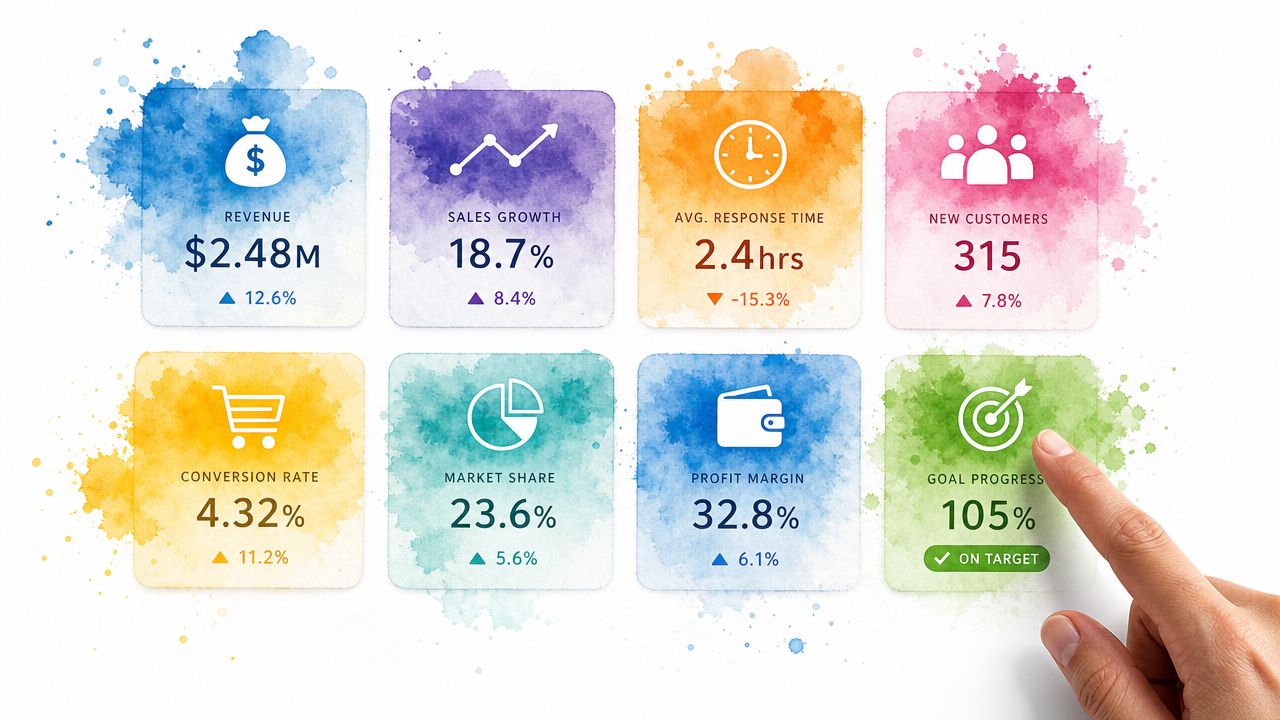
For most leadership teams, a compact set of metrics works better than a sprawling report. DFIN recommends a concise board package of three to six pages with 15 to 20 minutes reserved for board questions. Even if you don't have a formal board, that discipline applies. Brevity forces clarity.
Pick metrics that predict, not just describe
The best dashboard balances financial results with operational drivers. Revenue and gross margin matter, but so do the metrics that explain where those numbers are heading.
For example:
- Construction firms: Backlog quality, labor utilization, schedule adherence, and cash position.
- Distribution companies: Orders in hand, inventory days, customer fill issues, and receivables aging trends.
- Professional services firms: Billable utilization, realization, average bill rate, and pipeline quality.
If a metric doesn't trigger discussion or action, cut it. Your dashboard is not a data museum.
Make the dashboard usable
A scorecard works when every metric has four things attached to it: a definition, a target, an owner, and a comment when it moves materially. That comment matters. Numbers without interpretation create meetings full of guesswork.
Use color carefully. Green, yellow, and red can help, but only if thresholds are real. If everything is green because the targets are soft, the report becomes theater.
For a practical set of metrics to build around, review the financial metrics every business owner should track. Then assign each metric to a person who can influence it. Accountability dies when finance reports a metric that operations owns but no one discusses.
A dashboard should answer two questions fast. What changed, and who is doing something about it?
4. 4. Build a Foundation of Trust with a Standardized Chart of Accounts
When your chart of accounts is messy, every report built on top of it is suspect.
This is one of the least glamorous parts of financial reporting best practices, and it's one of the most important. If expenses get coded differently by location, manager, or month, your reports won't be comparable. If direct costs and overhead are mixed together, your gross margin will lie to you. If balance sheet accounts aren't reconciled monthly, your cash and earnings picture can drift without anyone noticing.
What “standardized” actually means
A standardized chart of accounts doesn't mean creating endless account detail. It means designing a structure your team can use consistently. Each account should have a clear purpose, plain-language usage guidance, and a defined owner for review where needed.
That matters even more when your business uses multiple systems. Independent guidance on financial reporting stresses using a single validated source of truth across the general ledger, ERP, CRM, and other systems, with automation, real-time data where possible, and standardized templates and support schedules. If your systems disagree, your reporting team spends its time reconciling chaos instead of explaining performance.
The non-negotiable controls
You don't need a huge accounting department to run a disciplined monthly close. You do need a few hard rules.
- Document account use: Write short instructions for common accounts so staff code transactions the same way.
- Reconcile every balance sheet account monthly: Cash, receivables, payables, inventory, debt, accruals, and intercompany balances all need support.
- Control manual journal entries: Require documentation and approval. Unsupported entries are how reporting quality degrades.
- Separate direct costs from overhead: If job or service margin matters in your business, this line can't be fuzzy.
A clean chart of accounts also makes handoffs easier during audits, due diligence, lender reviews, or leadership changes. Buyers and lenders don't just look at your numbers. They look at whether they can trust how those numbers were produced.
5. 5. Accelerate Cash Flow with Disciplined AR Aging Management
Revenue doesn't pay payroll. Collections do.
That's why your A/R aging report deserves more attention than most owners give it. An aging report groups outstanding invoices by how long they've been unpaid. The point isn't just to identify old balances. It's to show where cash is getting stuck and why.

If your team only reviews aging at month-end, you're missing the operational causes. Late invoices, missing backup, scope disputes, customer approval bottlenecks, and weak follow-up all show up in receivables before they show up in a cash problem.
How to manage aging like an operator
The companies that collect well don't wait for accounting to “work the list.” They treat collections as a cross-functional process.
A disciplined cadence usually includes:
- Weekly review: Look at current, slow-pay, and disputed balances every week.
- Named responsibility: Someone owns outreach, and someone senior owns escalation.
- Reason codes: Tag late invoices by cause, such as dispute, missing documentation, customer delay, or internal billing error.
- Prevention steps: Fix billing package quality, contract terms, and customer onboarding where delays repeat.
The A/R aging report is also one of the core reporting outputs that strong financial reporting should include alongside the income statement, balance sheet, statement of cash flows, and budget-versus-actual reporting, as noted earlier in the GAAP-based reporting guidance.
Don't let old invoices become normal
When an invoice gets old, many teams slip into passive language. “The customer is reviewing it.” “Payment is pending.” “They said next week.” That's not a collection process. That's a status update.
Owner's test: If an invoice is materially overdue, can someone on your team explain the exact blocker and the next action without opening five emails?
If the answer is no, your cash process is weaker than your revenue report suggests.
The importance of planning resurfaces. If you want to improve cash discipline across the business, pair aging review with your broader small business financial plan. Owners who manage receivables inside a larger cash strategy make faster decisions on credit terms, deposits, invoicing timing, and customer risk.
6. 6. Turn Data into Insight with Variance Analysis and Commentary
Most monthly reporting stops too early. It shows the numbers, then leaves everyone else to guess what changed.
Variance analysis fixes that. It compares actual results against budget, forecast, or prior period, then explains the reason for the gap in plain English. Not accounting language. Business language.
A useful variance report doesn't say revenue was below plan and leave it there. It says revenue was below plan because two large jobs didn't bill on schedule, or because average selling price slipped, or because staffing constraints limited capacity. That explanation changes the decision.
What good commentary sounds like
The best commentary is short, specific, and forward-looking. It answers four questions:
- What moved
- Why it moved
- Whether it's one-time or recurring
- What it means for the next period or the full year
That last point matters. If freight costs rose, labor utilization dropped, or a project start moved out, leadership needs to know whether the issue is contained or likely to continue. Good variance analysis pulls accounting into management. Bad variance analysis keeps them separate.
Set a standard for the narrative
I like a simple rule. Every material variance gets a written explanation that a non-finance owner can understand in one read. If the note sounds like it was written for another accountant, rewrite it.
You also need thresholds. If your team writes commentary on every tiny variance, they'll waste time and stop paying attention to the big issues. Focus on the items that change decisions.
“Budget versus actual” is not insight. “Budget versus actual, why, and what we're doing next” is insight.
This practice becomes even more effective when your data is machine-readable and standardized. The SEC's Financial Statement Data Sets provide structured numeric face-financial data from public company filings for research and cross-company comparison. Most private businesses won't use that dataset directly for routine reporting, but it reinforces the same principle. Standardized data makes validation and variance analysis more reliable. Once your internal reporting follows a consistent structure, your team spends less time arguing about numbers and more time interpreting them.
7. 7. Maximize Your Valuation with an Exit-Ready Financial Review
If you think financial cleanup starts when you hire an investment banker, you're late.
An exit-ready financial review is one of the highest-value reporting exercises a founder can do, even if a sale isn't imminent. It forces you to look at your business the way a buyer, lender, or investor will. They won't just ask whether revenue is growing. They'll ask whether earnings are sustainable, controls are credible, customer concentration is manageable, and financial policies are consistent.
What buyers usually care about
Most acquirers want clean reporting, normalized earnings, and fewer surprises. “Normalized earnings” means adjusting reported results to reflect the recurring performance of the business rather than owner-specific or one-time activity. That can include unusual legal costs, one-off cleanups, discretionary owner spending, or nonrecurring operational disruptions.
A serious review also checks whether your supporting schedules are complete, whether balance sheet accounts tie out cleanly, and whether key accounting judgments are documented. If that sounds basic, it is. Basic issues are exactly what create friction in diligence.
Why this matters before a transaction
An owner who starts early has options. You can improve customer concentration, tighten controls, document policies, and fix old accounting inconsistencies before someone else discovers them. That usually leads to a cleaner process and a stronger negotiating position.
I've seen owners realize too late that their financial story depends on undocumented adjustments only they understand. That's a problem. If your value case requires a long verbal explanation, buyers will discount it.
External expertise can prove useful. A fractional CFO or exit planning advisor can help management build a normalized earnings view, identify control gaps, and prepare the business for diligence. If a transition is on your horizon, this roadmap to a stress-free business exit lays out the planning logic well.
Exit planning isn't only about selling. It often improves day-to-day management because it exposes where reporting is too dependent on founder memory, loose coding, or informal decisions.
8. 8. Align Your Team with an Integrated Budget and Rolling Forecast
A budget without a forecast becomes stale. A forecast without a budget becomes reactive.
You need both. The annual budget sets direction. The rolling forecast updates reality. Together, they create a planning system your leadership team can use.
In practical terms, the budget should come from business drivers, not from adding a hopeful percentage to last year. Headcount plans, signed backlog, sales pipeline, pricing decisions, vendor cost expectations, utilization targets, and planned capital spending should all shape the numbers. Then the rolling forecast should update those assumptions as conditions change.
How to make the process useful
The most effective budgets are built with department ownership. Finance should coordinate, challenge assumptions, and translate operations into numbers. It shouldn't invent the operating plan on behalf of everyone else.
That means your sales leader owns revenue assumptions. Operations owns labor, capacity, or delivery assumptions. Department heads own hiring and controllable spending. Finance ties it together and shows what the combined decisions do to profit and cash.
A practical planning rhythm includes:
- Bottom-up budget building: Use operational drivers instead of broad top-line guesses.
- Quarterly forecast refreshes: Replace stale assumptions with actual performance and current pipeline reality.
- Scenario planning: Build a base case, upside case, and downside case so leadership can move faster when conditions change.
- Assumption discipline: Document pricing, staffing, timing, and demand assumptions in writing.
Keep the reporting package concise
If your budget review deck is bloated, leaders stop engaging. That same board-reporting discipline noted earlier applies here too. Keep the package focused, summarize key changes clearly, and reserve time for discussion instead of reading slides out loud.
I also recommend standardized templates, assumption narratives, and support schedules for budget and forecast reporting. That creates consistency and credibility, especially when multiple department heads contribute inputs.
If your current planning process feels ad hoc, start with a cleaner structure using this guide on how to create a business budget. The goal isn't producing a perfect spreadsheet. It's creating a management system that helps your team see changes early and respond with discipline.
8-Point Financial Reporting Best Practices Comparison
| Practice | Implementation complexity | Resource requirements | Expected outcomes | Ideal use cases | Key advantages |
|---|---|---|---|---|---|
| 1. 13-Week Rolling Cash Flow Forecast | Medium–High, weekly process and integrations | Accurate AR/AP data, accounting + ops collaboration, automation tools | Near-term liquidity visibility; early shortfall detection | Mid-market firms with irregular/seasonal cash cycles (construction, distribution) | Prevents cash crises; reduces emergency financing; supports covenant talks |
| 2. Margin Analysis by Job/Project/Client | Medium–High, granular tracking and allocation | Time tracking, job-level costing, cost-allocation methodology | True profitability by job/client; pricing and resourcing decisions | Service- and project-driven businesses (construction, professional services) | Identifies loss-making work; improves pricing and resource allocation |
| 3. Integrated KPI Dashboard & Scorecard | Medium, metric selection and system integration | Data feeds (accounting, CRM, PM), dashboard tool, user training | Real-time performance visibility; leading indicators; shared accountability | Founder-led $10M–$100M companies needing alignment | Aligns leadership; speeds problem detection; reduces reporting time |
| 4. Standardized Chart of Accounts | Medium, design, documentation, monthly discipline | Experienced accounting staff, reconciliation processes, policies | Reliable, comparable financial statements; smoother audits | Growing companies, audit/exit preparation, multi-location firms | Accurate statements; simplifies audits; foundation for analysis |
| 5. Disciplined AR Aging Management | Low–Medium, repeatable process and policy | Finance/ops time, invoicing automations, escalation protocols | Lower DSO; improved cash conversion; fewer bad debts | Cash-constrained firms or those with significant receivables | Accelerates collections; often improves cash w/o new capital |
| 6. Variance Analysis & Commentary | Medium, templates and disciplined review | FP&A/accounting time, ops collaboration, materiality rules | Clear reasons for performance gaps; better forecasts; accountability | Multi-division firms and those seeking tighter control | Translates results into actions; improves forecast accuracy |
| 7. Exit-Ready Financial Review | High, comprehensive review and remediation | Fractional CFO or advisors, management time, possible remediation cost | Normalized earnings; fewer diligence surprises; valuation uplift | Owners planning exit in 3–10 years; M&A candidates | Increases valuation readiness; speeds due diligence; fixes deal risks |
| 8. Integrated Budget + Rolling Forecast | High, bottom-up build plus ongoing updates | Cross-department inputs, FP&A tools, quarterly update cadence | Strategic alignment; in-year agility; informed capital/hiring decisions | Companies wanting strategic planning with operational accountability | Aligns strategy and finances; keeps forecasts current with scenarios |
From Report to Results Your Next Financial Move
Financial reporting best practices matter because they change how you run the business. They help you move from reacting to results after the fact to managing the drivers that create those results in the first place. This is the core shift. Better reporting doesn't just make the finance function cleaner. It gives you better control over cash, margin, accountability, and long-term value.
For founder-led businesses in the $10M to $100M range, that shift is usually overdue. At that stage, instinct still matters, but it isn't enough by itself. The business has more people, more systems, more customer complexity, more working capital pressure, and more downside if management misses a trend. Reporting has to evolve from historical bookkeeping into a practical operating tool.
That doesn't mean building a giant corporate reporting machine. It means tightening the handful of reporting practices that change decisions. A weekly 13-week cash flow forecast can surface liquidity pressure before it becomes urgent. Margin analysis by job or client can show you which revenue is worth pursuing. A scorecard can expose the operating metrics that are driving next month's numbers, not just last month's outcome.
The same is true at the foundation level. A standardized chart of accounts and reliable reconciliations make every downstream report more trustworthy. Disciplined A/R aging management turns revenue into cash faster. Strong variance analysis gives your team a common language for what changed, why it changed, and what to do next. And if an ownership transition is part of your future, exit-ready financial review work can improve both valuation readiness and day-to-day decision quality.
If you're not sure where to start, don't try to implement all eight at once. Pick the reporting gap that is currently costing you the most. If cash feels tight, start with the rolling cash flow forecast and A/R discipline. If revenue is growing but profit isn't, start with margin analysis and variance commentary. If your leadership meetings feel unfocused, build the KPI dashboard and tighten your budget and forecast process.
The key is to make the work operational, not theoretical. Reports should have owners. Assumptions should be documented. Variances should lead to decisions. Metrics should trigger action. If a report doesn't help you decide faster or better, it probably needs to be simplified or replaced.
This is also where many owners benefit from outside financial leadership. A fractional CFO can help build reporting systems that fit the way your company operates, rather than dropping in generic templates that no one uses consistently. AmbitionCFO is one option for founder-led businesses that need support with cash flow management, profitability analysis, forecasting, KPI reporting, and exit planning.
Don't let your financial package sit in your inbox as a compliance artifact. Use it to run the company. The businesses that do this well usually aren't guessing less because they became cautious. They're guessing less because they built a reporting system that gives them better visibility, earlier signals, and more confidence in the decisions that matter.
If your reporting isn't giving you clear answers on cash, profitability, and what to do next, AmbitionCFO can help you build a practical finance system for a founder-led business. Reach out if you want support with rolling cash flow forecasts, job or client margin analysis, KPI dashboards, budgeting, or exit-ready financial reporting.