
Are you a business owner asking, "How do I make my profits more predictable?" or "How do I prepare my company for its next big growth step?" If so, you're looking for more than just accounting—you need a financial strategy.
A fractional CFO is your company’s financial co-pilot—an experienced, high-level strategic partner who provides executive leadership without the full-time salary. They help you navigate tricky financial waters, from mastering your cash flow to plotting a long-term growth strategy. It's the perfect solution for businesses that need sophisticated financial guidance but aren't ready for a six-figure, in-house executive.
Your On-Demand Financial Co-Pilot
Every growing business eventually reaches a critical point. The founder, who once easily managed the finances, is now drowning in spreadsheets, stealing precious time away from steering the company. At this stage, you need more than just basic bookkeeping; you need a forward-looking financial strategy, not just a rearview mirror of past transactions.
This is exactly where a fractional Chief Financial Officer (CFO) makes a difference. They offer the C-suite oversight you crave on a flexible, part-time schedule. Instead of just reporting on what happened last month, they help you map out what needs to happen next quarter and for years to come.
The fractional model is catching on fast. In the U.S., there's been a 103% year-over-year surge in demand for fractional CFOs. In fact, requests for all fractional C-suite roles have skyrocketed by 310% since 2020. It's a trend fueled by startups and mid-market companies who want top-tier expertise without the hefty commitment. You can explore more on the growth of the fractional CFO industry to see just how many businesses are embracing this new way of working.

Clarifying The Roles In Your Finance Function
To grasp what a fractional CFO brings to the table, you need to understand how they fit with other financial roles. Many business owners mistakenly lump bookkeepers, controllers, and CFOs together, but each plays a distinct—and crucial—part in your company's success.
Key Definitions:
Bookkeeper: Records daily financial transactions. They manage the past.
Controller: Oversees the accounting function and prepares financial statements. They manage the present.
CFO (Chief Financial Officer): Uses financial data to develop strategies for growth, manage risk, and increase company value. They manage the future.
This simple breakdown is the key to unlocking real growth. While accurate books and tight financial controls are the bedrock of any healthy business, it's the fractional CFO who builds on that foundation to drive decisions that boost profits and increase your company's value.
Actionable Takeaway: Assess Your Current Financial Team
Grab a piece of paper and list your current finance-related tasks. Next to each task, write down who performs it (you, a bookkeeper, an accountant). Now, look at the table below. Do you have anyone focused on the "Fractional CFO" column? If not, you've identified a strategic gap in your business.
| Function | Bookkeeper | Controller | Fractional CFO |
|---|---|---|---|
| Focus | Daily Transactions (Past) | Financial Reporting (Present) | Strategic Growth (Future) |
| Key Tasks | Data entry, bank reconciliation, payroll processing, accounts payable/receivable. | Manages accounting team, ensures accurate financials, oversees month-end close. | Financial forecasting, cash flow strategy, fundraising, M&A, KPI analysis. |
| Main Question Answered | "Are our books accurate?" | "How did we perform last month?" | "Where are we going and how will we get there?" |
As you can see, these roles aren't interchangeable—they're complementary. A good bookkeeper ensures your data is clean, a controller turns that data into reliable reports, and a fractional CFO uses those reports to chart a course for the future.
What a Fractional CFO Actually Does: The Core Responsibilities
Think of it this way: your bookkeeper is the historian, meticulously recording what’s already happened. Your controller is the journalist, reporting on the present state of affairs. A fractional CFO, on the other hand, is the architect of your financial future.
Their job isn’t just to manage the numbers. It’s to use them to build a more predictable, profitable, and valuable business. They bring a powerful blend of high-level strategy and practical, hands-on execution that fundamentally shifts your company from reactive to proactive. You stop being surprised by your finances and start controlling your destiny.
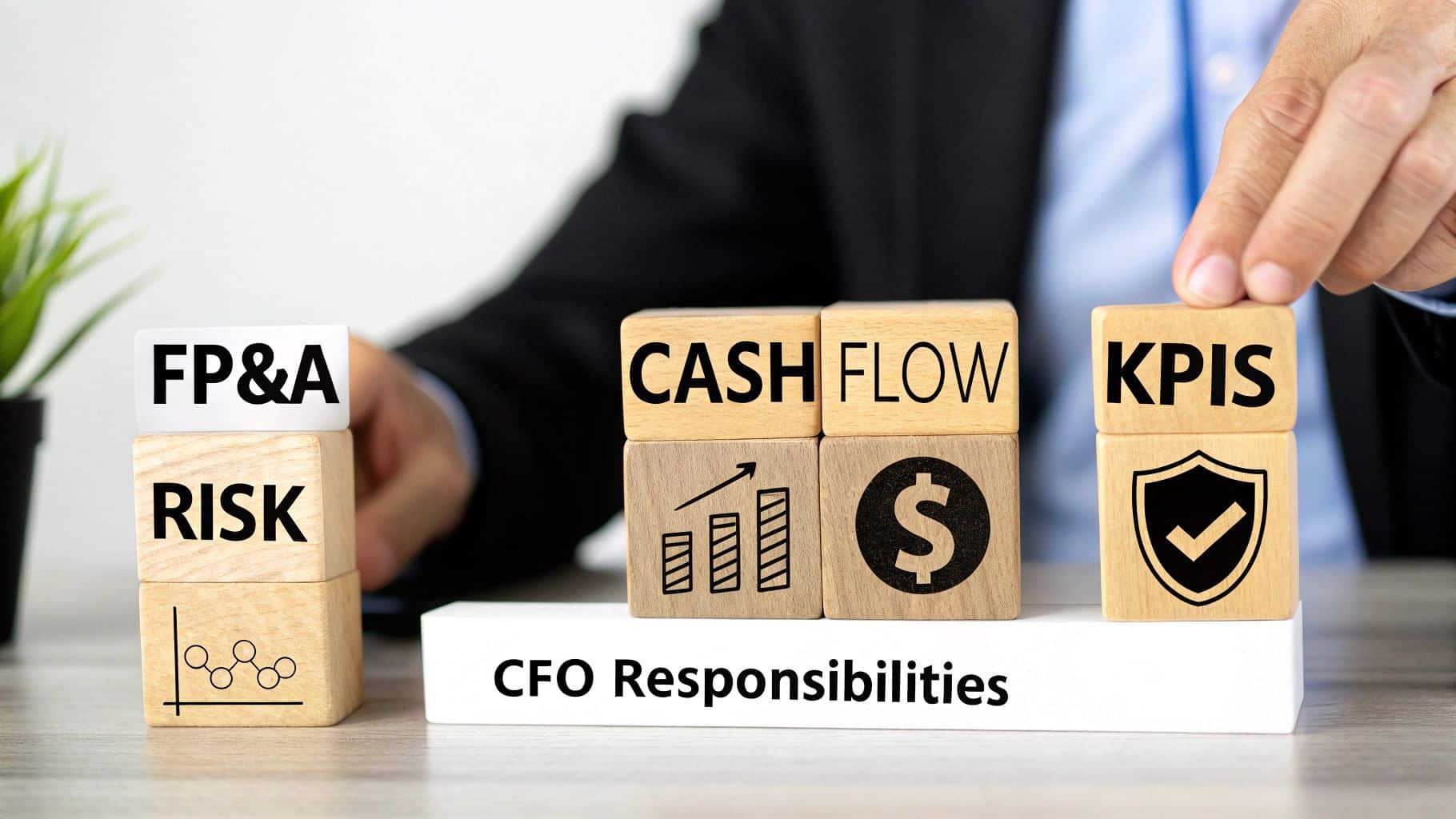
Strategic Financial Planning and Analysis (FP&A)
FP&A (Financial Planning & Analysis) is the process of creating a financial roadmap for your business. A fractional CFO translates your vision into a solid financial model, complete with realistic budgets and forward-looking forecasts. This is the bridge connecting your ambitions to your day-to-day operations.
They help you answer tough questions with data:
Can we afford to hire five new people next quarter?
What happens to our cash runway if sales drop by 20%?
Which of our products generates the most profit?
This process transforms your budget from a restrictive document into a strategic tool for growth. You start making decisions based on solid data, not just gut feelings, ensuring every dollar works as hard as it can.
Mini Case Study: A B2B software company with $5M in annual revenue had unpredictable profits. Their new fractional CFO built a rolling 12-month forecast linked to their sales pipeline. This clarity allowed them to shift marketing spend to higher-margin customer segments, boosting their net profit margin by 8% in just six months. The business improved by turning data into actionable marketing decisions.
Cash Flow Management and Optimization
Cash is the oxygen your business needs to survive. A fractional CFO acts as its guardian. They go beyond tracking money in and out; their real focus is on actively improving your cash conversion cycle. That's the time it takes to turn an investment (like inventory) into cash in the bank.
Practical Steps to Improve Cash Flow:
Analyze Accounts Receivable: Identify customers who consistently pay late.
Adjust Invoicing: Shorten payment terms from 30 days to 15, or require deposits upfront.
Review Accounts Payable: Negotiate longer payment terms with key vendors.
Manage Inventory: Liquidate slow-moving stock to free up cash.
By optimizing your cash flow, a fractional CFO ensures you always have the capital you need to make payroll, jump on new opportunities, and navigate unexpected storms.
Financial Reporting and KPI Dashboards
Raw financial data is overwhelming. A fractional CFO translates that complexity into clear, actionable insights. They build reporting systems and Key Performance Indicator (KPI) dashboards tailored to what drives your business. A KPI is a measurable value that demonstrates how effectively a company is achieving key business objectives.
Instead of a 50-page financial statement, you get a one-page dashboard highlighting metrics that matter:
Customer Acquisition Cost (CAC): How much you spend to get a new customer.
Lifetime Value (LTV): The total revenue a customer will generate.
Gross Margin %: The profit left after subtracting the cost of goods sold.
Monthly Recurring Revenue (MRR): Predictable revenue for subscription businesses.
This clarity empowers your leadership team. You can spot trends early, identify problems before they escalate, and seize opportunities with confidence. The conversation shifts from, "What just happened?" to "What's our next move?"
Risk Management and Compliance
As your business grows, so do the financial risks. A fractional CFO is your front line of defense, identifying and neutralizing threats before they become expensive problems. This covers everything from ensuring adequate insurance coverage to keeping you compliant with tax laws and industry regulations.
They put strong internal controls in place to prevent fraud, manage foreign exchange risk if you do business internationally, and ensure your financial house is in order for any potential audit.
This proactive approach protects your company's assets and reputation. Instead of a $250,000 to $400,000 annual salary for a full-time executive, you get the same high-caliber guidance for a fraction of that cost, helping you spot trends and eliminate waste. You can read the full research about the growth of the fractional CFO industry to learn more.
Navigating High-Stakes Growth Milestones
While a fractional CFO helps with day-to-day financial health, their value shines brightest during make-or-break moments. These are the critical junctures where strategic financial leadership is essential. Think of them as a specialist you bring in for the most complex, high-stakes procedures.
Navigating a fundraising round, an acquisition, or a successful sale requires a specific skill set. So, what does a fractional CFO do in these moments? They bring the foresight, credibility, and hands-on execution needed to maximize your outcome and minimize risk.
Fundraising And Capital Strategy
Raising capital requires a convincing financial story that investors can back. A fractional CFO is the architect of that story. They get your company ready for the intense scrutiny of due diligence, making sure your financials tell a clear, compelling narrative of growth.
Practical Steps for Fundraising Prep:
Build an Investor-Grade Financial Model: This is a dynamic spreadsheet that projects revenue, costs, and cash flow under different scenarios. It shows investors how their money will fuel growth and deliver a return.
Craft the Financial Narrative for Your Pitch Deck: They translate complex financial data into a few powerful, easy-to-understand slides that nail your business model and market opportunity.
Prepare a Virtual Data Room: They organize all financial documents, contracts, and corporate records in one secure place to anticipate every question an investor might ask. This builds critical trust.
We saw this play out with a tech client who brought in a fractional CFO to build out robust financial forecasts and overhaul their pricing. That strategic groundwork directly led to a successful $12 million Series B raise just 18 months later. The investors specifically mentioned that the company's polished financial operations were a key reason they invested. You can discover more insights about the growth of the fractional CFO industry to see just how common this impact has become.
Mergers And Acquisitions Support
Whether you're buying another company or being acquired, Mergers & Acquisitions (M&A) are incredibly complex. A fractional CFO serves as your objective financial guide, steering you with a clear, data-driven perspective.
If you’re acquiring a company, they perform financial due diligence to uncover red flags. They scrutinize the target's financial health, pressure-test their revenue claims, and calculate potential integration costs. This protects you from overpaying or inheriting unforeseen problems.
If your company is the acquisition target, your fractional CFO gets you ready for the buyer's magnifying glass. They ensure your financial house is in perfect order to maximize your valuation and ensure the deal is structured in your favor.
Strategic Exit Planning
The most profitable business exits are planned years in advance. A fractional CFO specializing in exit planning helps you work backward from your goal, methodically turning your business into an irresistible asset.
Your business is likely your single largest asset. An exit plan isn't just a "nice to have"—it's the strategic roadmap for realizing its full value and securing your financial future.
They work with you to find and fix "value gaps"—weak spots in your operations or financials that could lower your company's sale price. This proactive work might mean improving profit margins, locking in long-term customer contracts, or shoring up your management team so the business isn't so dependent on you.
Case Study In Action:
A manufacturing business owner wanted to retire in five years. He hired a fractional CFO with an exit planning certification. Over two years, the CFO executed a plan focused on:
Diversifying the customer base to reduce risk.
Improving inventory turnover to free up cash.
Documenting key processes to prove the business could run without the owner.
The numeric outcome? When the owner sold, the business was more profitable and seen as less risky. He sold the company for a price 25% higher than the initial valuation—a direct result of the strategic groundwork laid by the fractional CFO.
When Should You Hire a Fractional CFO?
Pinpointing the exact moment to bring in a fractional CFO can make or break your growth. The right time isn't about hitting a specific revenue number. It’s about recognizing the growing pains that signal you've outgrown your current financial setup. If you find yourself nodding along to more than one of the scenarios below, you're ready for strategic financial leadership.
Your Revenue Is Growing but Your Profits Are Unpredictable
You've smashed the $2M revenue mark. The problem? Your bottom line is a mystery. One quarter you’re profitable, the next you’re scraping by, and you don’t know why.
The Risk of Doing Nothing: Flying blind on profitability means you’re likely burning cash in the wrong places. You might be pouring resources into low-margin services, slowly bleeding your company dry.
How a Fractional CFO Helps: They immediately dive into your unit economics and gross margins. They’ll build a financial model that clearly shows where every dollar comes from—and where it goes—so you can make decisions that lead to consistent profit.
You're Gearing Up to Raise Capital
Investors and lenders need more than a great pitch. They need a rock-solid financial plan that proves you know how to turn their capital into a healthy return.
Investors don’t just bet on great ideas; they bet on great execution. A solid financial model and a confident grasp of your numbers are non-negotiable.
Trying to wing it with sloppy spreadsheets kills an investor's confidence. A fractional CFO gets you ready for the intense scrutiny of due diligence. They’ll build an investor-grade financial model and help you craft a financial story that answers tough questions before they’re even asked.
You're Spending Too Much Time Worrying About Money
As the founder, are you losing more than 10 hours a month staring at spreadsheets, trying to forecast cash flow, or stressing about the numbers? Every hour you spend buried in financial tasks is an hour you’re not spending on product, sales, or leading your team.
This isn't just about lost time; it's about decision fatigue. When you're drained by financial anxiety, your ability to make sharp, strategic calls nosedives. A fractional CFO takes that weight off your shoulders, freeing up your mental bandwidth to focus on what only you can do: grow the business.
You're Planning a Major Strategic Move
Big moments like expanding into a new market, acquiring another company, or planning your exit are high-stakes. There's no room for financial error. These inflection points demand a level of strategic foresight that your day-to-day accounting can't provide.
A fractional CFO brings the expertise needed to navigate these complex transitions. They’ll model the financial implications, help you weigh the risks, and ensure you’re positioned to maximize value every step of the way.
Measuring the Tangible ROI of a Fractional CFO
It’s easy to think of a fractional CFO as a way to save money compared to a full-time executive. While true, the real value is in the tangible, measurable return they generate by building a smarter financial engine for your business.
A great fractional CFO transforms your financial data from a historical record into a forward-looking roadmap. They help you move from guessing to knowing, turning numbers into profitable decisions.
Key Metrics That Drive Your ROI
An experienced fractional CFO focuses on the handful of key performance indicators (KPIs) that truly signal your company's health and drive its long-term value.
They typically zero in on three critical areas to deliver measurable results:
Increased Gross Margin: They dig into your pricing models and cost of goods sold (COGS) to find hidden profit. For many businesses, a 2% bump in gross margin can double overall profitability.
Improved Cash Conversion Cycle (CCC): This metric tracks how quickly you turn investments back into cash. A fractional CFO can dramatically shorten this cycle, freeing up working capital for growth.
Higher EBITDA: As a core measure of operational performance and company worth, EBITDA (Earnings Before Interest, Taxes, Depreciation, and Amortization) is a major focus. By optimizing revenue and managing costs, a fractional CFO directly boosts this number, making your company more valuable.
The chart below shows the most common pain points that lead founders to seek this level of strategic financial help.
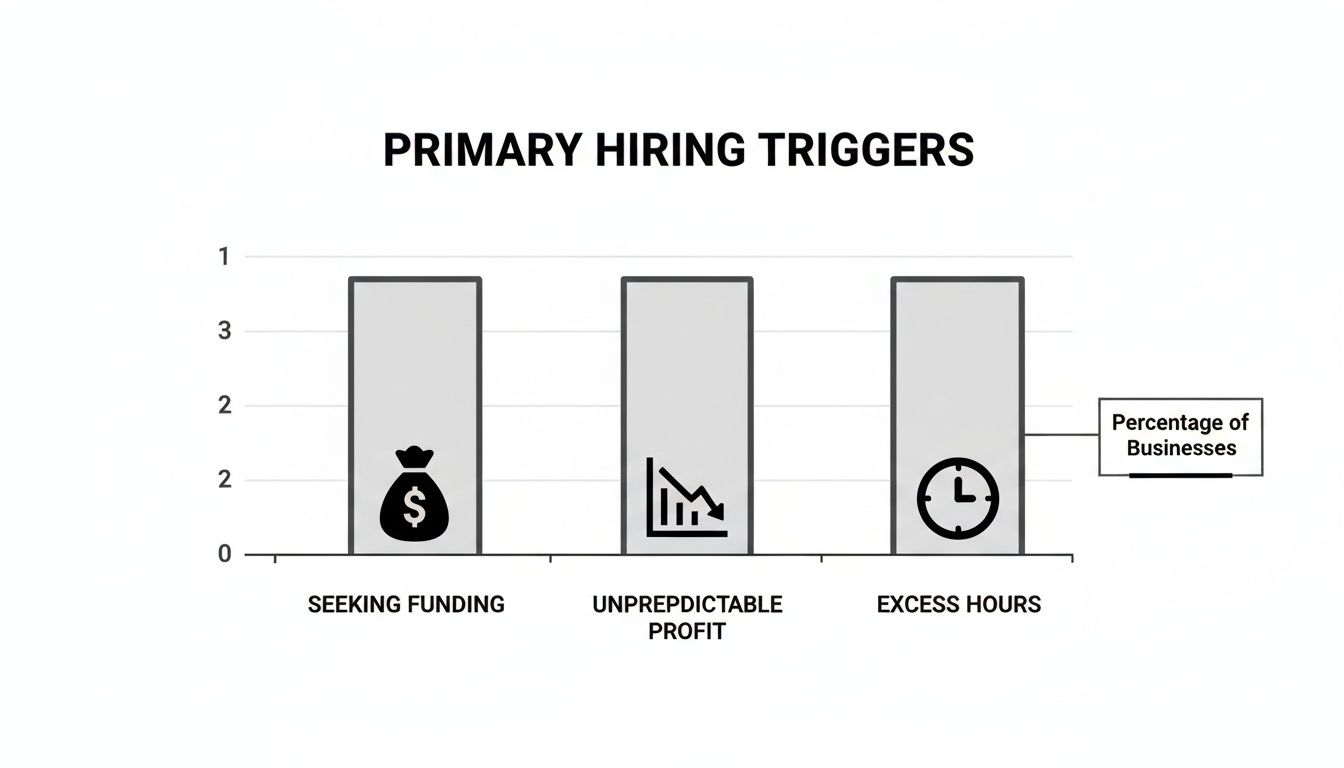
Whether you’re chasing investment, dealing with unpredictable profits, or spending too much time in spreadsheets, these are signs that you need the clarity and direction a fractional CFO provides.
Real-World Impact: The 'Before and After' with a Fractional CFO
The following table shows the kind of real-world transformation a business can experience within just 12 months of bringing on a fractional CFO. It turns abstract benefits into concrete outcomes that matter most.
| Metric | Before Fractional CFO | After Fractional CFO (12 Months) | Business Impact |
|---|---|---|---|
| Cash Flow Visibility | 30-day forecast (at best) | 90+ day rolling forecast | Proactive decision-making, ability to seize opportunities |
| Time to Close Financials | 20 business days | 5 business days | Faster insights, more time for strategic analysis |
| Gross Profit Margin | 45% | 52% | Increased profitability and funds for reinvestment |
| EBITDA | $250,000 | $600,000 | 140% increase in operational profit and company value |
| Founder's Time on Finance | 15 hours/month | 3 hours/month | Renewed focus on sales, product, and team leadership |
As you can see, this isn't just about tidying up the books. It's about building a more predictable, valuable, and resilient company.
The leverage you get is incredible. One tech company saved roughly $450,000 over two years compared to a full-time CFO, all while getting better results. They saw a first-year ROI between 350-600%, which blows the typical 150-300% return for a permanent hire out of the water. You can learn more about fractional CFO industry findings and see just how powerful this model has become.
How We Turn Financial Stress into Strategic Momentum
Knowing what a fractional CFO does is one thing. Finding the right partner—who goes beyond crunching numbers and truly joins your leadership team—is another.
At AmbitionCFO, we don't just hand you reports. We embed ourselves in your business, helping you ask the right questions so you can make smarter, bolder decisions. Our aim is simple: to transform financial complexity from a source of stress into your biggest competitive advantage.
Think of us less as consultants and more as part of your crew. We're in the trenches with you, rolling up our sleeves to build the financial infrastructure your business needs to grow profitably and sustainably. We get to know your operations, your people, and your vision on a deep level.
A Partnership Built for the Long Haul
We’re here to create lasting value, not just quick fixes. It starts with a rock-solid financial foundation—making sure your reporting is accurate, timely, and useful. From there, we work with your leadership team to craft a clear financial roadmap, complete with forecasts and KPIs that get everyone pulling in the same direction.
We believe financial leadership should be a tool for making better decisions, not just a review of past ones. Our job is to give you the clarity and foresight to confidently navigate whatever comes next.
One of the things that sets us apart is our deep expertise in strategic exit planning. A successful exit doesn’t just happen; it’s the result of years of careful preparation. Our team includes Certified Exit Planners who know how to get you there. We help you spot and fix value gaps, protect business continuity, and structure a transition that secures your legacy and financial future.
This forward-looking approach means every decision you make today actively builds a more valuable company for tomorrow.
Your Next Actionable Step
Stop driving your business by looking in the rearview mirror. Contact us at AmbitionCFO for a consultation and let's build a financial roadmap that turns your biggest goals into reality.
Frequently Asked Questions
Even after getting a good handle on the role, you probably still have some practical questions. Let's tackle the most common things business owners ask when they're thinking about bringing on a fractional CFO.
Fractional CFO vs. Outsourced Accounting: What's the Difference?
This is a critical distinction. Think of it with an altitude analogy.
Outsourced Accounting is your team on the ground. Their job is to record history perfectly. They handle daily transactions, run payroll, and close the books. They ensure your financial data is clean and accurate.
A Fractional CFO is flying the plane at 30,000 feet. They take the historical data from your ground crew and use it to chart the course forward. Their work is all about strategy—financial modeling, cash flow management, and helping you make the big decisions that will shape your company's future.
Simply put, one keeps your books, and the other uses those books to help you build a more valuable business.
What Does the Onboarding Process Look Like?
A smooth start is everything. The first 30 to 60 days are all about deep-dive discovery and alignment.
The point of onboarding isn’t just getting logins; it’s about aligning with your vision. A great fractional CFO takes the time to truly understand your business model, culture, and goals so their financial strategy helps you get there.
The process usually breaks down into three key steps:
Discovery and Diagnosis: The CFO will dig into your current financial statements, systems, and processes to get a clear picture of where things stand.
System Integration: They'll get access to your accounting software (like QuickBooks or Xero), bank accounts, and any other tools they need.
Goal Setting and Roadmap: You'll work together to map out priorities for the first 90 days, setting clear goals and the KPIs you'll use to measure success.
Can a Fractional CFO Help My Specific Industry?
Yes. While every industry has its own quirks—from SaaS metrics to e-commerce inventory challenges—the fundamental principles of a strong financial strategy are universal. A seasoned fractional CFO knows how to apply their expertise to your specific world.
The best ones have worked across many sectors and can quickly get up to speed on what drives your market. They bring proven financial frameworks and combine them with an understanding of your industry's specific levers, ensuring the advice is genuinely relevant and actionable for you.
Stop managing your finances by looking in the rearview mirror. AmbitionCFO gives you the forward-looking strategic partnership you need to build a more predictable and valuable business.
Contact us for a consultation to build a clear financial roadmap.
Prepared with the Outrank tool